Her new CEO told her she needed to be more inspiring. She tried. Six months later, she was a stranger in her own job. Let's call her Priya.
Priya was a VP of Engineering running a team of about forty. On paper, everything was working. Her teams shipped on time. Her architecture decisions were consistently right. Her org was the one other groups benchmarked against.
Then the company brought in a new CEO. And the feedback started: "You need to be more visible. More inspiring. People respect you, but they don't feel connected to you."
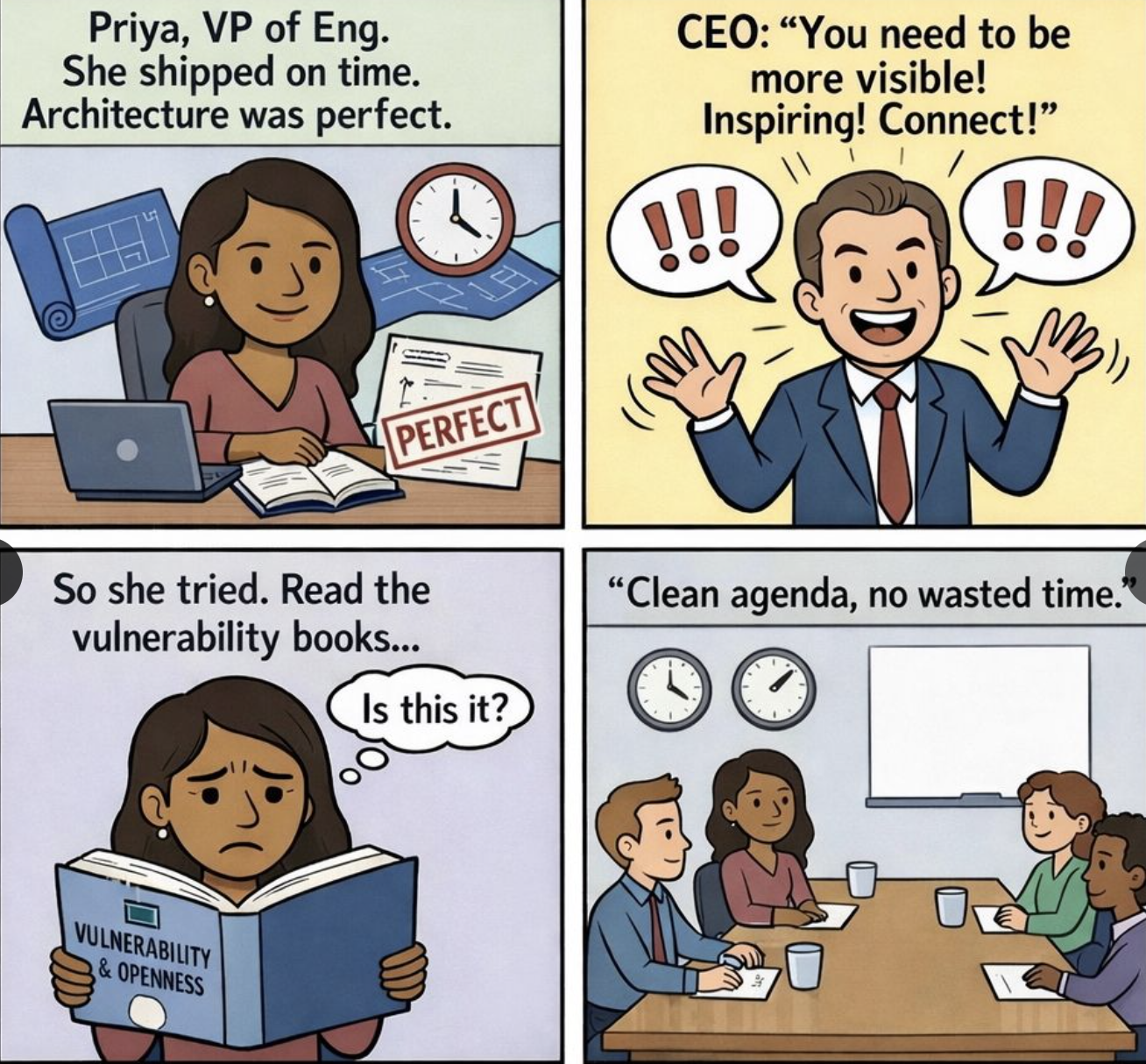
So she tried. She started doing all-hands with personal anecdotes. She scheduled skip-levels. She read a book about vulnerability in leadership. None of it was bad advice. All of it was fine. And fine was the problem.
I sat in on one of her leadership meetings. She ran it the way she ran everything — clean agenda, clear decisions, no wasted time.
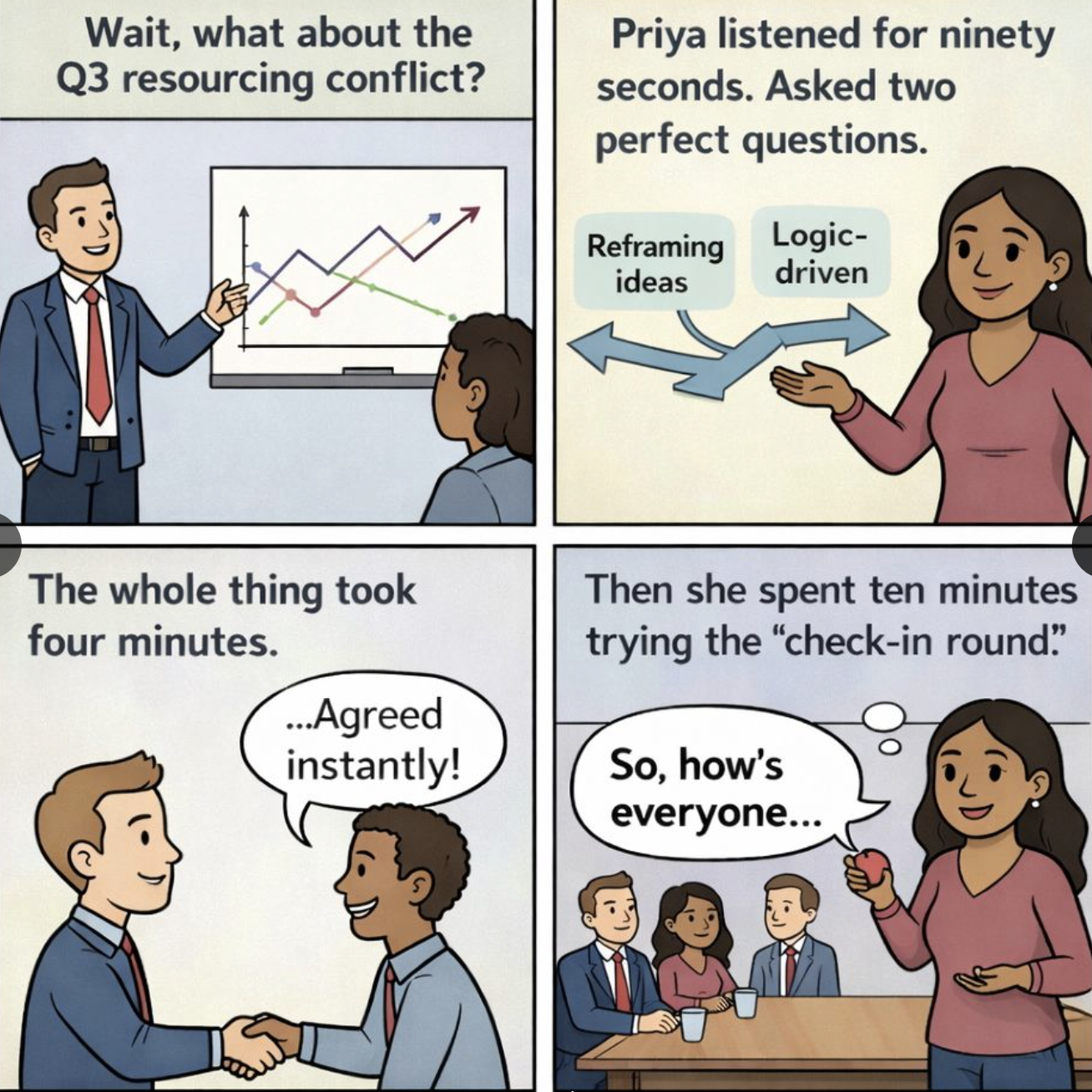
At one point a director brought up a resourcing conflict between two teams. Priya listened for about ninety seconds, asked two questions that reframed the whole problem, and laid out a path forward that both leads immediately agreed to. The whole thing took four minutes.
Then she spent the last ten minutes of the meeting trying to do a "check-in round" she'd picked up from a management workshop. How's everyone feeling about Q3. What's on your mind. The room went polite and flat. Everyone found their neutral face.
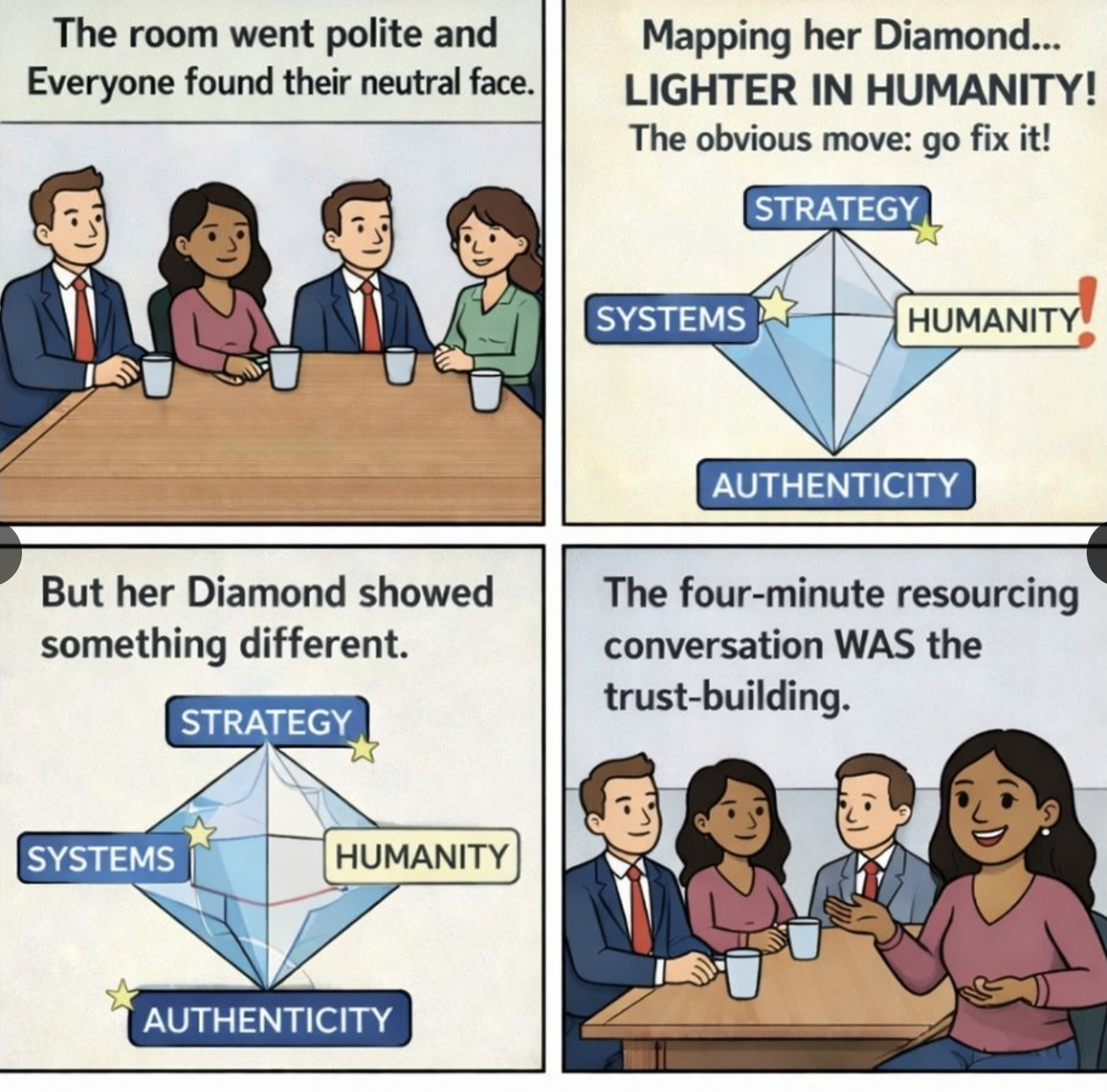
When we mapped her Diamond, the shape was immediately clear — strong in Strategy and Systems, lighter in Humanity. The obvious move would be: there's your gap, go fix it.
But here's what the Diamond actually showed: that four-minute resourcing conversation was the connection. Her teams didn't feel disconnected from her. They felt anchored by her. Her consistency — and her refusal to bullshit — that was already building trust. Just not the kind that looks good in a keynote.
It wasn't a warmth problem. The work was to stop second-guessing the kind of trust she was already building.
So she cut the check-in rounds, and the meeting stopped trying to prove it had feelings.