In my last post, I told the story of drifting from my own center after a promotion — and not realizing it until much later. This post is about something worse.
Leadership development runs on a single verb: become.
Become more strategic. Become more present. Become more operational. Close the gap between who you are and who the role needs you to be.
Nobody questions the verb. It sounds like growth. It's structured like growth. It comes with a plan, a coach, a set of milestones, and a quarterly check-in that all point in the same direction — toward a version of you that doesn't exist yet.
And sometimes development does work. But when it does, it's usually not because the leader became something new — it's because the process accidentally reconnected them with something that was already there. The development plan got credit. The center did the work. Restoration, dressed up as transformation.
Then there's the version where it doesn't work — and nobody notices. Because the leader is actively collaborating in their own displacement.
A leader who's great at making hard calls quickly — and gets coached on "building more consensus" until every decision takes three meetings and a Slack poll. Nothing broke. The organization just got slower, and nobody connects it to the development plan.
A leader whose authenticity is her edge — direct, occasionally blunt, deeply trusted because people always know where they stand — who gets feedback to "soften her delivery." She does. Six months later, her team sees her as "more polished" but "harder to read." Same person. Less signal.
These aren't failures of development. They're successes — pointed in the wrong direction.
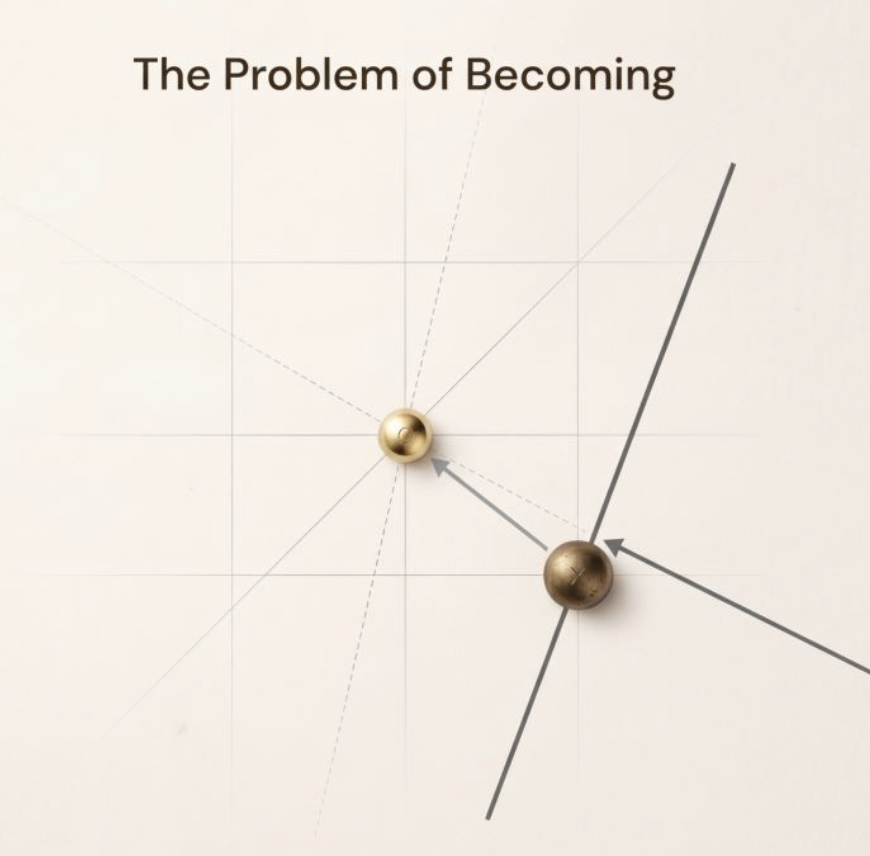
I've spent several posts exploring how leaders drift from center. Drift is real and it's common. But drift is passive. It happens to you. This is different. This is drift with intent. The leader isn't losing their footing — they're rebuilding it, deliberately and effortfully, in a place that was never theirs.
Becoming is a choice you make with both hands on the wheel. And you roll with it — because every signal that something is off gets interpreted as evidence that growth is working.
This isn't an argument against skills. Learn to run a tighter operating review. Get better at giving feedback. Build financial fluency. All useful. But skills serve leadership. They don't constitute it.
Leading from center makes a leader coherent — judgment sharpens, energy sustains, trust forms naturally instead of being manufactured. But often the development industry treats capability as a path to coherence. It isn't.
Sometimes the skill a leader is told to develop is actually better served through a strength that is natural to them — not the one the development plan expects.
The goal isn't to stop developing. It's to stop building in a direction that requires you to leave yourself behind to get there.